|
|
2026-2027 Catalog
Course Descriptions
|
|
|

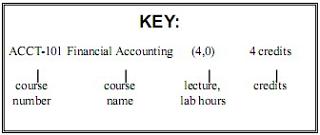
Course descriptions are listed on the following pages, alphabetically and by course prefix. The four letter prefix identifies subject area and the three numbers that follow identify the particular course. The numbers in parenthesis indicate the number of lecture and lab hours per week, assuming a typical 15-week semester.
The description of each course indicates its credit value which determines the tuition charge and the number of credits available toward the requirements for a degree.
|
| |
| |
-
ACCT 101 - Financial Accounting Lecture/Lab Hours: (4/0) 4 Credits
This course explores the basic structure and concepts of accounting. Accounting processes for both service and merchandising enterprise, including the entire accounting cycle, are studied in depth. Emphasis is placed on journal entries, adjusting and closing entries and financial statements. Additional topics covered in detail are evaluation of inventories, deferrals and accruals, methods of depreciation, bank reconciliations, shareholder equity, bonds and payroll accounting.
Course link
|
| |
-
ACCT 104 - Managerial Accounting (4,0) 4 Credits
Prerequisite(s): ACCT 101 - Financial Accounting
The topics covered in this course will enable students to analyze and interpret both historical and estimated data used by management to conduct daily operations, plan future operations, and develop overall business strategies. Additional topics covered in detail are Statement of Cash Flows, financial analysis, job order and process costing, budgeting, standard costs, differential analysis, and product pricing are some of the topics covered.
Course link
|
| |
-
ACCT 203 - Intermediate Accounting I (3,1) 3 Credits
Prerequisite(s): ACCT 104 - Managerial Accounting .
This course further develops accounting principles as they apply to classification and presentation of financial statements. Topics covered are income statements, balance sheets, stockholder’s equity statements, cash flow statements, time value of money, current assets, current liabilities, inventory (including estimating techniques), plant, property, and equipment, and intangible assets.
Course link
|
| |
-
ACCT 204 - Intermediate Accounting II (3,1) 3 Credits
Prerequisite(s): ACCT 203 - Intermediate Accounting I .
This course further develops accounting principles as they apply to classification and presentation of financial statements. Topics covered include investments, contributed corporate capital, stockholder’s equity, leases, current liabilities and contingencies, bonds and long-term notes, deferred income taxes, and pension funds.
Course link
|
| |
-
ACCT 221 - Tax Accounting I (3,0) 3 Credits
Corequisite(s): ACCT 101 Financial Accounting .
This course is a study of current federal income tax law as it applies to the individual taxpayer. Familiarization with tax forms and their preparation is emphasized.
Course link
|
| |
-
ACCT 225 - Accounting Systems and Software (2,2) 3 Credits
Prerequisite(s): ACCT 101 - Financial Accounting .
In this hands-on course, students will learn to use computerized software to record the transactions of a small to medium-sized business. Topics covered include customer- and vendor-related transactions, end-of-period transactions, payroll, and setting up a new company.
Course link
|
| |
-
ACCT 226 - Volunteer Income Tax Assistance (VITA) (1,4) 3 Credits
The VITA program provides low to moderate income taxpayers assistance in the preparation of their tax returns. Students receive Internal Revenue Service (IRS) training to help prepare tax returns in the local community. Once training is completed, students must pass the IRS’s written examination to become VITA certified and complete the required staffing hours during tax filing season. Emphasis is on the application of current tax law, communication skills, and community service. Course is offered in the Spring semester only.
Course link
|
| |
-
ACCT 229 - Payroll Accounting (3,0) 3 Credits
Prerequisite(s): ACCT 101 Financial Accounting .
This course covers federal and state laws pertaining to wages, payroll taxes, payroll tax forms, and journal and general ledger transactions. Emphasis is placed on understanding and interpreting the laws as well as computing wages, calculating social security, income, and unemployment taxes; preparing appropriate payroll tax forms; and journalizing/posting transactions. Upon completion, students should be able to analyze data, make appropriate computations, complete forms, and prepare accounting entries. Additionally, while it is not a required part of the course, the course will prepare the students to take the Fundamental Payroll Certification (FPC) exam offered through the American Payroll Association (APA)
Course link
|
| |
-
ACCT 290 - Accounting Coop Education I (135 Work Site Hours) 3 Credits
Prerequisite(s): ACCT 101 Financial Accounting , and approval of coordinator.
Cooperative Education Approval Form Required. See Department Co-op Coordinator.
This course serves as an introductory work program in a component of accounting that provides an experiential learning opportunity for students interested in pursuing a career in accounting occupations. Students will be exposed to the roles of various accounting practitioners at public accounting firms and private industry/government entities. Students will be encouraged to observe and critically analyze the day-to-day operations of accounting and apply theoretical concepts learned in the classroom to the work environment.
Course link
|
| |
-
ACCT 291 - Accounting Coop Education II (135 Work Site Hours) 3 Credits
Prerequisite(s): ACCT 101 Financial Accounting , ACCT 290 Accounting Coop Education I , and approval of coordinator.
Cooperative Education Approval Form Required. See Department Co-op Coordinator.
This course is second cooperative education course where students expand on the skills learned in ACCT 290 with regard to the development of job objectives. This course serves as an advanced work program in a component of accounting that provides an experiential learning opportunity for students interested in pursuing a career in accounting occupations. Students will be exposed to the roles of various accounting practitioners at public accounting firms and private industry/government entities. Students will be encouraged to observe and critically analyze the day-to-day operations of accounting and apply theoretical concepts learned in the classroom to the work environment.
Course link
|
| |
-
ANTH 101 - Introduction to Cultural Anthropology (3,0) 3 Credits
General Education Course: Social Science, Global and Cultural Awareness
Prerequisite(s): Placement into with , or higher.
Anthropologist’s study human lives to make sense of a number of relationships: between the individual and society, structure and agency, and between ideas about the universal and the particular. This course will introduce students to the field of anthropology by focusing on essential topics in cultural anthropology such as religion, kinship, race and ethnicity, gender, language, food procurement, economy, and political organization. In this class, we explore how culture operates in our daily lives and gives rise to difference, grounds similarity, and changes throughout time and space.
Course link
|
| |
-
ANTH 101H - Introduction to Cultural Anthropology- Honors (3,0) 3 Credits
General Education Course: Social Science, Global and Cultural Awareness
Prerequisite(s): Placement into ENGL 111 English Composition I with ENGL 070 English Composition I Workshop , or higher, and a minimum GPA of 3.5 or permission of instructor.
Anthropologists’ study human lives to make sense of a number of relationships: between the individual and society, structure and agency, and between ideas about the universal and the particular. This course will introduce honors students to the field of anthropology by focusing on essential topics in cultural anthropology such as religion, kinship, race and ethnicity, gender, language, subsistence strategies, economy, and political organization. Honors students will be expected to explore these fundamental anthropological concepts through the completion of a service-based project. They will be expected to use anthropological methods to collect qualitative and quantitative data in the field. Students will also be required to complete an interview and learn how to transcribe interviews anthropologically. Finally, students will be required to present a final peer-reviewed artifact with either an academic or applied focus based on their fieldwork. In this class, we explore how culture operates in our daily lives and gives rise to difference, grounds similarity, and changes throughout time and space.
Course link
|
| |
-
ANTH 102 - Human Origins (3,0) 3 Credits
General Education Course: Social Science
Prerequisite(s): Placement into ENGL 111 English Composition I with ENGL 070 English Composition I Workshop , or higher.
This course explores fundamental concepts that define what it means to be biologically and behaviorally human. Drawing upon evolutionary theory, we will trace the emergence of anatomical and behavioral developments within the lineage of Homo sapiens. This course covers a broad range of topics spanning seven million years of history, starting with the first bipedal steps taken by our hominin ancestors and ending with the Neolithic Revolution.
Course link
|
| |
-
ANTH 120 - Introduction to Archaeology (2,3) 3 Credits
The course introduces the basic principles, theories and methodologies used by archaeologists to reconstruct cultures, largely prehistoric, through the analysis of material culture. Special emphasis placed upon using archeology as a means to test hypotheses about prehistoric cultures and their development. Students will need to be available on at least two Saturdays or Sundays a month so that trips can be made to visit nearby archeological excavations.
Course link
|
| |
-
ANTH 202 - Global Patterns of Racism (3,0) 3 Credits
General Education Course: Global and Cultural Awareness
Prerequisite(s): ENGL 111 - English Composition I .
This interdisciplinary course draws on texts in the social sciences, history, and literature to survey the causes and manifestations of racism in diverse cultures. Examples are grouped under two models: colonial settler societies and societies that create an Internal Other. Case studies include European colonialism, slavery and post-slavery societies, caste societies, anti-Semitism, ethnic cleansing, imperialism and post-imperial genocides.
Course link
|
| |
-
ANTH 203 - Indigenous North America (3,0) 3 Credits
General Education Course: Social Science, Global and Cultural Awareness
Prerequisite(s): Placement into ENGL 111 English Composition I with ENGL 070 English Composition I Workshop , or higher.
This course will introduce students to Indigenous cultures in North America by focusing broadly on Indigenous Origin Stories; Pre-contact cultures and histories; the effects of settler colonialism on Indigenous peoples in the United States and Canada; and finally, Native American Activism. This course is meant to challenge traditional anthropological structures that emphasize culture areas, and instead attempts to understand the diversity of Indigenous cultures by incorporating Indigenous voices, theories, and politics through Open Educational Practices. This class takes a holistic approach that overlaps with ethnic studies, archaeology, and history.
Course link
|
| |
-
ARTH 101 - Art Appreciation (3,0) 3 Credits
General Education Course: Humanities-Appreciation of the Arts
This course does not have any pre-requisites or co-requisites. The course is an exploration of visual artworks and their historical and cultural connections from a global perspective. It will focus on the analysis of two and three dimensional art-forms including architecture by discussing the visual elements, media and methods used in creative thought and processes. The historical, social and cultural influences and their interactions will also be an integral part of the class discussions. Students will learn through lectures, readings, art projects, and museum and/or gallery visits
Course link
|
| |
-
ARTH 110 - Art from Prehistory to the Gothic Period (3,0) 3 Credits
General Education Course: Humanities-Appreciation of the Arts
This course is a basic interdisciplinary survey of western and Islamic art and architecture with strong emphasis on the social, political and cultural contexts of western civilizations from Prehistory through the Gothic period. Students will acquire a visual vocabulary of historical art styles. Museum visits will be arranged during the semester. Students will be required to write at least one term paper based on a museum visit. The museum visits, readings and assignments are planned specifically to train the students’ visual faculties in analyzing artworks and relating the artworks to their specific context and cultural period.
Course link
|
| |
-
ARTH 110H - Art from Prehistory to the Gothic Period-Honors (3,0) 3 Credits
General Education Course: Humanities-Appreciation of the Arts
Prerequisite(s): A minimum GPA of 3.5 or permission of the instructor.
This course is a basic interdisciplinary survey of western and Islamic art and architecture with strong emphasis on the social, political and cultural contexts of western civilizations from Prehistory through the Gothic period. Students will acquire a visual vocabulary of historical art styles. The students will be asked to do additional readings besides the course textbook. These would be in the form of scholarly articles or short videos on related subjects. The students will be given in-class and take home written assignments that will require them to integrate their readings with the museum visits or films shown in class. At least two required museum visits will be arranged during the semester. The museum visits, readings and assignments are planned specifically to train the students’ visual faculties in analyzing artworks and relating the artworks to their specific context and cultural period.
Course link
|
| |
-
ARTH 111 - Art from the Renaissance to the Modern Era (3,0) 3 Credits
General Education Course: Humanities-Appreciation of the Arts
Prerequisite(s): ARTH 110 - Art from Prehistory to the Gothic Period .
A survey of western art history with emphasis on its relationship to civilization and its cultural context from Renaissance to the mid- 20th century in Europe and America. Students will acquire a visual vocabulary of historical art styles. Museum visits will be arranged during the semester. Students will also learn to analyze artworks which identify stylistic characteristics.
Course link
|
| |
-
ARTH 112 - The History of Visual Design (3,0) 3 Credits
This course will focus on the development of design and image as a pictorial method of interpersonal and cultural communication. It will begin with the earliest forms of visual communication (cave paintings, pictorial language) through the discipline’s technological advancements and artistic movements. It will also extensively discuss type and its development in visual communication.
Course link
|
| |
-
ARTH 203 - Modern & Contemporary Art (3,0) 3 Credits
This course is a survey of modern art from the late 19th century to the present. Major artists in painting, sculpture, architecture and new media will be studied in the context of developments in Western art. Parallels will be drawn to nonwestern art. Students will learn about the major artistic and historical developments of this time period through lectures, readings, class discussions and museum and gallery visits. Offered every other year in the spring semester.
Course link
|
| |
-
ARTH 205 - American Art (3,0) 3 Credits
A survey of American painting, sculpture and architecture from colonial times to the present. Major artists and styles will be studied in the context of American culture and will be examined against the background of European sources and parallels. Students will learn about the major artistic and historical developments of this time period through lectures, readings, class discussions and museum and gallery visits. Offered every other year in even numbered years.
Course link
|
| |
-
ARTH 206 - Impressionism and Post-Impressionism (3,0) 3 Credits
The study of paintings and sculpture by major European and American artists of the late 19th and early 20th century with an emphasis on the development of Impressionism and Post- Impressionism as artistic movements. Students will learn about the major artistic and historical developments of this time period through lectures, readings, class discussions and museum and gallery visits. Offered every other year in odd numbered years.
Course link
|
| |
-
ARTH 208 - Art Beyond the Western World (3,0) 3 Credits
General Education Course: Humanities-Appreciation of the Arts, Global and Cultural Awareness
A survey of non-Western art, to include painting, sculpture and architecture, from the establishment of the various societies to be covered up to the 20th century. The art of China, Japan, Korea, India, Africa, Islam, Oceania and Mesoamerica will be studied in context of each culture. Parallels will be drawn to to Western art. Students will learn about the major artistic & historical developments of the different cultures through lectures, class discussions and museum visits. Offered in the fall semester.
Course link
|
| |
-
ARTH 210 - Introduction to Contemporary Art (3,0) 3 Credits
Prerequisite(s): ARTH 110 Art from Prehistory to the Gothic Period .
This course presents an introduction to contemporary art and media. Students will critically examine images and our relationship to their truthfulness through contemporary media images and related works by modern and contemporary artists. Art is about looking, and then about thinking critically about what we see. Readings, film viewings, artworks, research and discussion on the nature of reality and truth in images will give students specific skills in making and viewing art, and will also make them more discriminating participants and consumers concerning journalism, media and culture. Students will read and discuss widely-read articles on images and culture from 20th century critical theorists.
Course link
|
| |
-
ARTH 223 - History of Photography (3,0) 3 Credits
General Education Course: Humanities-Appreciation of the Arts
This course will survey the history of photography and how it is used as an art form and how it has impacted media and science. Students will explore the aesthetic qualities of the photographic image along with its value as a historical document and scientific tool.
Course link
|
| |
-
ARTS 105 - Two-Dimensional Design (2,2) 3 Credits
This course is an introduction to the various aspects of art and design. Using a combination of traditional and digital media, students explore the basic elements used in art-making and the design principles that guide visual form. Topics will focus on the relationship of visual form to meaning and interpretation. Students will purchase some art supplies.
Course link
|
| |
-
ARTS 106 - Foundations of Game Engines (2,2) 3 Credits
This course will introduce students to the art and programming aspects of developing for commercial game engines. The focus will be on the processes and techniques necessary to add creative and advertising components into functional computer game models. Students will work with game development programmers in industry standard software (Unity, Construct) on a series of modular assignments.
Course link
|
| |
-
ARTS 108 - Three-Dimensional Design (2,2) 3 Credits
This course emphasizes basic design vocabulary as well as the concepts and history specific to three-dimensional design. Coursework includes classroom exercises, readings, discussions and critiques. Students will work in a variety of materials and employ a variety of processes. Some art supplies will need to be purchased.
Course link
|
| |
-
ARTS 110 - Basic Drawing I (2,2) 3 Credits
This course is an introduction to visual expression through the exploration of various black and white media. Still life, landscape, portrait, and other subjects will be drawn. Formal concepts such as line, texture, value and perspective will be explored through representational and abstract means.
Course link
|
| |
-
ARTS 111 - Basic Drawing II (2,2) 3 Credits
Prerequisite(s): ARTS 110 - Basic Drawing I .
This course further develops the student’s concepts acquired in Drawing I by applying creative assignments using color media, such as: chalk pastel, color pencil, oil pastel, gouache, crayon and mix-media with more intense focus on personal context, and the introduction of color theory. Some subjects will be still-life, portrait, landscape, and drawing from a live model. Both realism and abstraction are encouraged. Students must purchase art supplies as needed.
Course link
|
| |
-
ARTS 112 - Introduction to Digital Photography (2,2) 3 Credits
Intro to Digital Photography will explore electronic imaging through the use of digital cameras and scanning. This course will cover basic technical information relating to the appropriate hardware and software used in electronic imaging, basic photographic concepts and terminology. This course will also explore creative uses of digital photography as an art form. Students must have a digital camera with aperture, shutter and manual exposure controls. Students must purchase some art supplies.
Course link
|
| |
-
ARTS 113 - Audio Production (2,2) 3 Credits
This course introduces students to the fundamentals of multitrack audio production. Students will explore recording techniques, including the choice of microphones and their placement, as well as mixing multi- rack audio utilizing equalization, compression, reverb, and panning. With an emphasis on acoustics and the physics of sound, class projects will focus on producing audio for music distribution, radio, computer gaming, and film.
Course link
|
| |
-
ARTS 121 - Watercolor I (2,2) 3 Credits
Prerequisite(s): ARTS 110 - Basic Drawing I .
This course is an introduction to the techniques and aesthetics of watercolor. Gouache will be introduced as a minor element. Self- expression will be encouraged through creative problems. Color theory and methods of applying paint will be explored. Students will work from both indoors and outdoors from still life, nature, the figure model, self-portraits, and from their imaginations. Students will purchase their own art supplies.
Course link
|
| |
-
ARTS 129 - Three Dimensional Modeling (2,2) 3 Credits
Corequisite(s): ARTS 106 Foundations of Game Engines .
This course affords students an immersion into the techniques used in creating three dimensional multimedia assets and incorporate them into interactive environments. Students will construct industry quality three dimensional objects, landscapes, interiors and character models.
Course link
|
| |
|
| |
-
ARTS 132 - Color Theory (2,2) 3 Credits
No prerequisites and/or co-requisites required. This course is an introduction to the characteristics of color and its interaction. Major color theorists will be presented such as Itten and Albers. Assignments will include the creative application of color theory in various media including computers. Students will purchase their own art supplies.
Course link
|
| |
-
ARTS 205 - Drawing III (2,2) 3 Credits
Prerequisite(s): ARTS 111 - Basic Drawing II .
The course will concentrate on both black and white and color drawing with an emphasis on creative problem solving on an advanced level. Traditional and nontraditional use of the media will be encouraged with the objective of focusing on drawing as a personal expressive medium. Contemporary concepts in drawing will be explored. The figure model will be a drawing subject for a couple of sessions. Students will purchase their own art supplies. Offered in the spring semester.
Course link
|
| |
-
ARTS 209 - Two Dimensional Game Design Studio (2,2) 3 Credits
Prerequisite(s): ARTS 105 Two-Dimensional Design or GDEV 106 Fundamentals of Game Design .
Two Dimensional Game Design Studio takes students through the process of creating an industry competitive two dimensional tabletop or video game. Students will learn not only to refine and combine system design and art development, they will also work on a deadline schedule to emulate the commercial design environment. They will also create a holistic concept, brand, packaging, and a finished playable game using industry production checklists.
Course link
|
| |
-
ARTS 210 - Acrylic & Oil Painting I (2,2) 3 Credits
Prerequisite(s): ARTS 110 - Basic Drawing I .
This course is an introduction to the techniques of acrylic and oil painting. Aesthetics, color theory and methods of applying paint will be explored through creative problems. Self expression will be encouraged. Assignments will cover various subject matter, including still life, figure model, landscape, and abstraction. Students may choose to focus on oil or acrylic as their dominant medium for assignments. Students will purchase most of their own art supplies.
Course link
|
| |
-
ARTS 211 - Acrylic & Oil Painting II (2,2) 3 Credits
Prerequisite(s): ARTS 210 - Acrylic & Oil Painting I .
This course is a continuation of Acrylic & Oil Painting I with emphasis upon individual creative expression. Traditional techniques such as glazing and impasto will be further investigated as well as more experimental approaches to painting such as mix-media, multi-panel, and painting installations. Traditional subject matter such as the landscape and the figure model will be painted, as well subjects chosen by the student. Students may choose to focus on oil or acrylic as their dominant medium for assignments. Students will purchase most of their own art supplies.
Course link
|
| |
-
ARTS 212 - Still Photography I (2,2) 3 Credits
This course is an introduction to black and white photography and covers basic camera operation, film processing and darkroom printing. Students will also be exposed to aesthetic and critical issues related to the medium of photography. Purchase of additional supplies required. Students may have their own 35 mm manually operational camera or borrow one from the Visual & Performing Arts Department on a first come, first served basis.
Course link
|
| |
-
ARTS 215 - Ceramics I (2,2) 3 Credits
Ceramics I introduces students to the basic theory and practice involved in the forming and processing of clay from its raw state to the finished art object. Handbuilding processes will be emphasized as well as basic glaze application, glaze making and ceramic firing techniques. Students will learn the handbuilding techniques of pinch, coil and slab. Vessels and clay sculpture will be explored. Clay and a tool kit will be supplied by the college. Students will purchase some additional art supplies.
Course link
|
| |
-
ARTS 216 - Ceramics II (2,2) 3 Credits
Prerequisite(s): ARTS 215 - Ceramics I .
Ceramics II introduces students to the basic theory and practice involved in making forms on the potter’s wheel. Students will learn basic wheel thrown forms that can be used in functional pottery and ceramic sculpture. Students will also learn glaze and firing techniques using glazes for the gas kiln. Students will purchase vouchers for clay through the Finance Department, and will be responsible for purchasing other supplies, such as a ceramics tool kit and glaze brushes, on their own.
Course link
|
| |
-
ARTS 218 - Sculpture I (2,2) 3 Credits
Prerequisite(s): ARTS 108 - Three-Dimensional Design .
Sculpture I is an investigation of sculptural concepts, techniques, media, tools and vocabulary in order to further develop students’ sculptural skills and visual perception. The course involves exposure to contemporary sculptural concepts as well as traditional materials, technical information and personal expression. Students must purchase some art supplies.
Course link
|
| |
-
ARTS 219 - Sculpture II (2,2) 3 Credits
Prerequisite(s): ARTS 218 - Sculpture I .
This course offers an advanced sculpture student the opportunity to further investigate material processes and modes of presentation that reflect their specialized personal interests. An emphasis is placed on the development of personal language and concept. Students must purchase some art supplies.
Course link
|
| |
-
ARTS 220 - Advanced Photography (2,2) 3 Credits
Prerequisite(s): ARTS 112 - Introduction to Digital Photography and ARTS 212 - Still Photography I .
Advanced Photography will explore advanced digital camera as well as traditional film and darkroom techniques. In-depth technical and software information will be covered relating to Zone System and Camera RAW exposure and image manipulation. This course will also explore critical issues in photography and focus on developing a personal body of work. Students must have their own SLR style digital camera capable of exposing in RAW format. Students must purchase some art supplies.
Course link
|
| |
-
ARTS 222 - Ceramics III (2,2) 3 Credits
Prerequisite(s): ARTS 216 - Ceramics II .
Ceramics III is an advanced wheel throwing course with emphasis on making large forms. Students will also explore altered forms and combination wheel thrown and handbuilding forms. The successful student will be able to demonstrate an ability to throw large cylinder forms. They will also demonstrate an ability to enhance ceramic form by means of adding hand built parts. An advanced knowledge of glazing will also be demonstrated. Students will purchase vouchers for clay through the Finance Department..
Course link
|
| |
-
ARTS 223 - Advanced Glazing for the Studio Potter (2,2) 3 Credits
Prerequisite(s): ARTS 222 - Ceramics III .
This course instructs the student in the theory and practice of glaze chemistry and glaze formulation. Students will learn how to formulate original glazes from glaze materials. Instruction will cover stoneware and porcelain glazes as well as low-fire and Raku glazes. Special glaze effects such as lusters, ceramic decals, underglazes and overglazes will also be discussed and used. Students will purchase vouchers for clay through the Finance Department, and will be responsible for purchasing ceramic tools, glaze brushes and glaze containers on their own.
Course link
|
| |
-
ARTS 225 - Raku (2,2) 3 Credits
Prerequisite(s): ARTS 216 - Ceramics II .
An indepth study and practice of the ceramic process of Raku, a 16th century ceramic process originating in Japan. Students will learn the historical origins and meanings of Japanese Raku and its adaptation by Western potters. Students will learn the process of making Raku clay and glaze. They will also learn how to fire a Raku kiln. Students will work on individual and group projects. Students will purchase vouchers for clay through the Finance Department, and will be responsible for purchasing ceramic tools and fire resistant gloves on their own.
Course link
|
| |
-
ARTS 227 - Alternative Photographic Processes (2,2) 3 Credits
Prerequisite(s): ARTS 212 - Still Photography I or ARTS 112 - Introduction to Digital Photography
This course will explore techniques that go beyond the traditional photographic darkroom practices. Some of the techniques covered in this course may include non-silver processes such as cyanotype and gum printing, hand-coloring, image lifts and transfers, handmade pin hole cameras and other experimental manipulation of images. This course will also look at the historical significance of these techniques to the development of photography as an art form. Students will purchase additional art supplies. Offered in the spring semester.
Course link
|
| |
-
ARTS 228 - Contemporary Landscape Painting (2,2) 3 Credits
Prerequisite(s): ARTS 210 - Acrylic & Oil Painting I or ARTS 121 - Watercolor I or ARTS 111 - Basic Drawing II .
The landscape will be explored as a means of expressing our contemporary world via realism, metaphor and abstraction. Students will work outdoors at various sites on and off campus, including the rural landscape, cityscape, industrial sites and other outdoor locations. They will also develop ideas using source material such as sketches, props, and memory. Students will work in the color medium/media with which he/she has prior experience, including oil, acrylic, pastel, and watercolor. Collage and experimental use of media will be encouraged. Contemporary, post-modern and historical landscape painting and drawing will be discussed and addressed in their work. Students will purchase their own art supplies.
Course link
|
| |
-
ARTS 229 - Printmaking: Monoprint and Relief (2,2) 3 Credits
Prerequisite(s): ARTS 105 - Two-Dimensional Design or ARTS 110 - Basic Drawing I or permission of the instructor.
This course will explore one of the oldest techniques in printmaking: the relief print, in which the surface of a wood block or linoleum is cut away and the surface inked to form the image. A much more modern method of surface printing will also be explored: the monoprint, is a very direct, painterly method of making prints that results in a unique image. This studio experience is supplemented with slide lectures, reading assignments, and videotapes to put the process/prints in a formal design context and an art historical perspective. Students must purchase some art supplies. Offered in the fall semester.
Course link
|
| |
-
ARTS 230 - Mold Making, Casting and Replication (2,2) 3 Credits
Prerequisite(s): ARTS 218 - Sculpture I .
Mold Making, Casting and Replication is an investigation of the materials and duplication processes that three-dimensional artists have employed throughout history. Students will utilize three-dimensional design software and three-dimensional printing to create artistic forms that will be used for mold making techniques that range from simple to complex. Castings from the molds will be produced in a variety of materials such as plaster, clay, wax, urethane, and metal. Students must purchase some art supplies.
Course link
|
| |
-
ARTS 234 - Ceramics IV (2,2) 3 Credits
Prerequisite(s): ARTS 222 - Ceramics III and ARTS 223 - Advanced Glazing for the Studio Potter
This course offers the advanced ceramics student an opportunity to work on specialized projects in a classroom studio setting. Students will do advanced group and individual projects in wheelthrowing and/or handbuilding. Emphasis is on refinement of individual student skills and creative abilities. Students will purchase clay and supplies through RVCC. Offered in the spring semester.
Course link
|
| |
-
ARTS 235 - Acrylic & Oil Painting III (2,2) 3 Credits
Prerequisite(s): ARTS 211 - Acrylic & Oil Painting II .
This course is a continuation of Acrylic and Oil Painting I. The development of individual style, originality of expression, and portfolio preparation will be the focus, along with intermediate to advanced application of painting techniques and contemporary movements in painting. The figure model will be a painting subject for several sessions. Students may choose oil or acrylic as their dominant medium. Students will purchase most of their own art supplies.
Course link
|
| |
-
ARTS 236 - Acrylic & Oil Painting IV (2,2) 3 Credits
Prerequisite(s): ARTS 235 - Acrylic & Oil Painting III .
This course is a continuation of Acrylic and Oil Painting III using advanced concepts and techniques in painting with emphasis on the development of a strong individual style and originality of expression, independent projects, portfolio preparation, museum/gallery visits, and contemporary movements in painting. The figure model will be a painting subject for several sessions. Students may choose to paint with oil or acrylic as their dominant medium. Students will purchase most of their own art supplies.
Course link
|
| |
-
ARTS 242 - Figure Drawing I (2,2) 3 Credits
Prerequisite(s): ARTS 110 - Basic Drawing I .
This course will cover pictorial concepts motivated by the study of anatomy and the human figure. A live model will be drawn weekly. Students will primarily use black and white media, such as charcoal, graphite and ink. Students will purchase their own art supplies.
Course link
|
| |
-
ARTS 243 - Figure Drawing II (2,2) 3 Credits
Prerequisite(s): ARTS 242 - Figure Drawing I .
This course will cover pictorial concepts motivated by the study of anatomy and the human figure. A live model will be drawn weekly. Students will use color media such as pastels, oil bar, and water-base paint. A personal drawing style will be emphasized. Students will purchase their own art supplies.
Course link
|
| |
-
ARTS 246 - Visual Design I (2,2) 3 Credits
Prerequisite(s): ARTS 105 - Two-Dimensional Design .
This course is an introduction to the concepts and processes of graphic and media design. Students learn about the field of design and work with computers in bitmap, vector, multimedia software as well as with traditional art and design media.
The designer`s creative process and problem-solving skills are emphasized throughout the course to generate the beginnings of a design portfolio. Students will purchase some art supplies.
Course link
|
| |
-
ARTS 247 - Visual Design II (2,2) 3 Credits
Prerequisite(s): ARTS 246 - Visual Design I .
This course covers advanced concepts and processes of design and portfolio preparation. Students will continue to explore the creative process by combining bitmap, vector graphic, as well as traditional art and design media, toward original design solutions. Emphasis is placed on developing individual creative and critical thinking skills as they relate to professional work practices. Students will purchase some art supplies.
Course link
|
| |
-
ARTS 248 - Designing Motion Graphics (2,2) 3 Credits
Prerequisite(s): ARTS 246 - Visual Design I .
This course covers the concepts and techniques of creating motion graphics. Students will create original animations in traditional media, via timeline based programs, and through using character motion simulation tools. Students will purchase some art supplies.
Course link
|
| |
-
ARTS 249 - Digital Artmaking (2,2) 3 Credits
Prerequisite(s): ARTS 105 - Two-Dimensional Design & ARTS 110 - Basic Drawing I .
Students will explore creative expression in art beyond the traditional media of painting, drawing, photography and sculpture by using digital technology. Students will combine traditional artmaking with the use of digital imaging software applications and printing techniques. Emphasis is on creative thinking and problem-solving. Students will also explore theory, history and ethics involved with the computer as an art tool. Students must purchase some art supplies. Offered every other year in even numbered years.
Course link
|
| |
-
ARTS 250 - Printmaking: Silkscreen (2,2) 3 Credits
Prerequisite(s): ARTS 105 - Two-Dimensional Design or ARTS 110 - Basic Drawing I or permission of the instructor.
This course is an introduction to the printmaking process of silkscreen. The techniques covered in the course will include photo processes and drawing. Students will create with single and multiple color images using water base inks. They will be able to incorporate other techniques such as collage and painting. Students must purchase some art supplies. Offered in the fall semester.
Course link
|
| |
-
ARTS 252 - Portfolio Development: Studio Arts (2,2) 3 Credits
Prerequisite(s): ARTS 105 Two-Dimensional Design , ARTS 108 - Three-Dimensional Design , ARTS 132 - Color Theory , ARTS 111 - Basic Drawing II .
This course is designed to help prepare students majoring in Visual Arts to successfully transfer to a B.F.A. or B.A. in Art program or prepare an industry quality portfolio suitable for pursuing immediate work. The course will cover topics such as designing web and print portfolios, properly photographing and preparing images of art work, writing artist’s statements, assessing career options, and resume development. Students will purchase some art supplies.
Course link
|
| |
-
ARTS 253 - Introduction to Contemporary Printmaking (2,2) 3 Credits
Prerequisite(s): ARTS 105 - Two-Dimensional Design or ARTS 110 - Basic Drawing I .
This course is an introduction to recent developments in non toxic/less toxic techniques and materials for printmaking such as polyester plates for lithography and Image On film for intaglio. Students will also explore new ways to synthesize digital processes with traditional printmaking techniques to facilitate the process of printmaking. Students must purchase some art supplies.
Course link
|
| |
-
ARTS 254 - Art of the Book (2,2) 3 Credits
Prerequisite(s): ARTS 105 - Two-Dimensional Design or ARTS 110 - Basic Drawing I or permission of the instructor.
This course will introduce students to the design and construction of traditional and non-traditional paper based book formats. Conceptual thought will be applied to the book form by studying the narrative, alternative and sculptural quality of the book as a universal medium for the visual artist. Alternative media will be encouraged. Students will be required to purchase some art materials. Offered in the spring semester.
Course link
|
| |
|
| |
-
ARTS 259 - Game Narrative and Concepts (2,2) 3 Credits
Prerequisite(s): ARTS 106 Foundations of Game Engines or GDEV 106 Fundamentals of Game Design .
Game Narrative and Concepts introduces students to methods of building a cohesive framework and setting for games or other interactive narrative experiences. Believable environmental and political systems, cultures, characters, and mythologies are addressed. In addition storytelling and writing narrative arcs will be focused upon.
Course link
|
| |
-
ARTS 266 - Introduction to Video Production-Aesthetics (2,2) 3 Credits
This course introduces students to the fundamentals of digital video production. Students will learn how to produce short videos, including story-boarding, directing, lighting and shooting, and will finish productions using current video- and sound-editing software. The course examines the application of video in contemporary art, documentation, and television production.
Course link
|
| |
|
| |
-
ARTS 273 - Commercial Photography (2,2) 3 Credits
Prerequisite(s): ARTS 212 - Still Photography I or ARTS 112 - Introduction to Digital Photography .
This course covers the basic aspects of commercial photography including studio and location lighting, business and marketing skills and large format camera operation. Students will be required to furnish a 35mm film or digital camera that can be manually controlled and to purchase additional supplies. Offered in the fall semester.
Course link
|
| |
-
ARTS 274 - Visual Design for the Web (2,2) 3 Credits
Prerequisite(s): ARTS 246 - Visual Design I .
This course covers the concepts and techniques of art making for the world wide web and other interactive media environments. Students will create original web sites with attention to design fundamentals such as color, typography, imagery and composition. Students will also be introduced to content management systems, streaming media, sound and video for the web and designing for social platforms. Students will purchase some art supplies.
Course link
|
| |
-
ARTS 276 - Typography (2,2) 3 Credits
Prerequisite(s): ARTS 246 - Visual Design I .
This course facilitates an understanding of the effects produced by fonts and typographic techniques used in contemporary visual design. Using a combination of traditional and digital media, students will learn a historical overview of typography and explore the formal qualities of characters and typefaces through a range of theoretical and applied projects. The creative problem-solving process is used to develop skills in typesetting, typographic layout, the expressive use of type and conceptual thinking. Students will purchase some art supplies.
Course link
|
| |
-
ARTS 277 - Game Audio and Video (2,2) 3 Credits
Prerequisite(s): GDEV 106 - Fundamentals of Game Design .
This course will cover the theory, as well as practical applications, of audio and computer video techniques as used in the game industry. Emphasis will be placed on methods of sound integration and video effects and how they impact character development and enhance the game-playing experience. Additional audio topics covered include: sound perception, waveform editing, sound effects and an introduction to MIDI, music composition and voiceovers. Computer video topics include: image composition, virtual cameras, motion capture and video compression. Offered every other year in even numbered years.
Course link
|
| |
-
ARTS 288 - Studio Art Cooperative Education I (3,0) 3 Credits
Cooperative Education Approval Form Required. See Department Co-op Coordinator.
Cooperative Education is the integration of classroom study with specific planned periods of learning through employment to gain practical experience. The course utilizes a seminar approach with performance based activities and individual student objectives which are job related and employer evaluated.
Course link
|
| |
-
ARTS 296H - Visual Arts Honors Research Capstone (Independent Research: 135 Hours) 3 Credits
Prerequisite(s): Student must be enrolled in his or her last Honors College academic year before graduation.
This course is intended to guide sophomore Honors College students from all disciplines through the stages of conducting a semester-long research project in the visual arts. Students will become acquainted with research in the arts, including the social, cultural, political and/or historical context of the topic. Because the course will enroll from different disciplines, students will learn how to frame an argument, and make points outside their fields of study, which will help them develop a more interdisciplinary perspective. Class will include research training, developing a timeline, as well as independent study and research. Other topics may include planning, research and documentation, style and editing, design, oral presentations or artistic creations. Students may need to purchase art supplies as needed.
Course link
|
| |
-
ASL 101 - Introduction to American Sign Language I (3,1) 3 Credits
General Education Course: Humanities-World Language, Global and Cultural Awareness
Designed exclusively for students with no previous exposure to American Sign Language, this course develops basic signing skills and provides an introduction to Deaf culture and communities. The course is conducted in American Sign Language. Native users of ASL and students with successful completion of two or more years of American Sign Language (within the past 5 years) cannot receive credit for this course. The laboratory component provides self-paced skill development with individualized support by the instructor.
Course link
|
| |
-
ASL 102 - Introduction to American Sign Language II (3,1) 3 Credits
General Education Course: Humanities-World Language, Global and Cultural Awareness
Prerequisite(s): ASL 101 - Introduction to American Sign Language I .
Designed for students with one semester of American Sign Language, this course builds upon ASL 101 skills and some knowledge of the Deaf culture and community. The laboratory component provides self-paced skill development with individualized support by the instructor.
Course link
|
| |
-
ASL 201 - Intermediate American Sign Language I (3,0) 3 Credits
General Education Course: Humanities-World Language, Global and Cultural Awareness
Prerequisite(s): ASL 102 Introduction to American Sign Language II or appropriate placement score.
Intermediate American Sign Language I is designed for students with two semesters of American Sign Language or equivalent. This course is designed to further students’ linguistic competence in American Sign Language and cultural awareness of Deaf culture. Conducted in American Sign Language.
Course link
|
| |
-
ASL 202 - Intermediate American Sign Language II (3,0) 3 Credits
General Education Course: Humanities-World Language, Global and Cultural Awareness
Prerequisite(s): ASL 201 Intermediate American Sign Language I or appropriate placement score.
Intermediate American Sign Language II is designed for students with three semesters of American Sign Language or equivalent. This course is designed to improve students’ skill in American Sign Language and awareness of Deaf culture through current events and social issues. Students will learn to communicate complex concepts conceptually and further their fluency. Conducted in American Sign Language.
Course link
|
| |
-
AUTC 101 - Automotive Introduction, Fundamentals, and Safety (3,3) 4 Credits
Prerequisite(s): Placement into MATH 020 Elementary Algebra and ENGL 060 Introduction to College Reading and Composition II .
Corequisite(s): AUTC 104 Automotive Electrical Systems I , AUTC 109 Brake Systems , AUTC 201 Engine Systems & Emission Control I . (Students must be registered in the same section for each course)
This course will provide an overview of basic theory and functions of all automotive systems. This course will also introduce students to automotive industry standard practices including shop safety, use of chemicals, documenting repair estimates and work orders, identifying careers in the auto industry, and learning employability skills. Upon completion of this course, the student will be familiar with the tools, service procedures, and safety customary to the automotive field. This course will prepare students for OSHA 10 hour certifications in general industry safety.
In the lab, students will learn a hands-on strategy using different types of lifting equipment, perform basic maintenance of the shop, and learn how to use a variety of hand tools, power tools, and precision measurement tools. Students will be required to wear clothing appropriate for auto shop safety at all classes. Safety glasses will also be required at all classes.
Course link
|
| |
-
AUTC 104 - Automotive Electrical Systems I (2,3) 3 Credits
Corequisite(s): AUTC 101 Automotive Introduction, Fundamentals, and Safety , AUTC 109 Brake Systems , AUTC 201 Engine Systems & Emission Control I . (Students must be registered in the same section for each course)
Principles of electricity, circuitry and service are included in this course. It will cover batteries, starting and charging systems, lighting and accessory systems as well as laws relating to power and consumption of electricity including Kirchhoff’s Law, Ohm’s Law, and Watt’s Law. Skills in trouble-shooting the automotive electrical system will be developed with the use of modern testing and service equipment.
In the lab, students will learn a hands-on strategy to perform basic maintenance of electrical components and learn how to use a variety of hand tools and precision measurement tools. Students will be required to wear clothing appropriate for auto shop safety at all classes. Safety glasses will also be required at all classes.
Course link
|
| |
|
| |
-
AUTC 116 - Automatic & Manual Transmissions (2,3) 3 Credits
Prerequisite(s): AUTC 101 Automotive Introduction, Fundamentals, and Safety .
Corequisite(s): AUTC 202 Engine Performance and Diagnosis I , AUTC 205 Automotive Cooling & Climate Control Systems , AUTC 210 Suspension & Steering Systems . (Students must be registered in the same section for each course)
This course will cover the theoretical understanding of principles, maintenance, and adjustments required for today’s automatic and manual transmissions and their components. This includes torque converters, clutches, transaxles, drive shafts, final drives, and all-wheel drive units. Students will experience the installation and adjustment of clutches, manual transmissions, automatic transmissions, universal joints, axles, drive shafts, and other drive train components. Diagnosis and service of transmissions and drive train components are included.
In the lab, students will learn a hands-on strategy to perform basic maintenance of manual transmissions, automatic transmissions, clutches, torque converters, axles, and drive train components. Students will also learn how to use a variety of hand tools and precision measurement tools. Students will be required to wear clothing appropriate for auto shop safety at all classes. Safety glasses will also be required at all classes.
Course link
|
| |
-
AUTC 201 - Engine Systems & Emission Control I (2,3) 3 Credits
Corequisite(s): AUTC 101 Automotive Introduction, Fundamentals, and Safety , AUTC 104 Automotive Electrical Systems I , AUTC 109 Brake Systems . (Students must be registered in the same section for each course)
This course will include a study of various automotive engine systems with respect to theory and operation of the internal combustible engine, the OTTO cycle, lubricating system, and coolant system. Training is provided in diagnosing, repairing, and theory of the following subsystems: cylinder block, cylinder heads, and intake and exhaust systems with emphasis on emission control systems.
In the lab, students will learn a hands-on strategy to perform basic maintenance of engines and learn how to use a variety of hand tools and precision measurement tools. Students will be required to wear clothing appropriate for auto shop safety at all classes. Safety glasses will also be required at all classes.
Course link
|
| |
-
AUTC 202 - Engine Performance and Diagnosis I (1,3) 2 Credits
Prerequisite(s): AUTC 201 Engine Systems & Emission Control I , AUTC 104 Automotive Electrical Systems I , AUTC 101 Automotive Introduction, Fundamentals, and Safety .
Corequisite(s): AUTC 210 Suspension & Steering Systems , AUTC 205 Automotive Cooling & Climate Control Systems , AUTC 116 Automatic & Manual Transmissions . (Students must be registered in the same section for each course)
This course will include a study of theories and practice of various automotive engine control systems. The course will build diagnostic skills related to troubleshooting engine computer systems. The use of up-to-date testing equipment, including the scan tool and lab scope are used in checking the electrical, ignition, emissions system, and general engine conditions.
In the lab, students will learn a hands-on strategy to perform basic maintenance of engines and learn how to use a variety of hand tools and precision measurement tools. Students will be required to wear clothing appropriate for auto shop safety at all classes. Safety glasses will also be required at all classes.
Course link
|
| |
-
AUTC 204 - Automotive Electrical Systems II (2,3) 3 Credits
Prerequisite(s): AUTC 101 Automotive Introduction, Fundamentals, and Safety , AUTC 104 Automotive Electrical Systems I .
Corequisite(s): AUTC 208 Engine Performance and Diagnosis II , AUTC 220 Hybrid/Electric Vehicles , AUTC 221 Engine Systems & Emission Control II , AUTC 290 Automotive Cooperative Education I . (Students must be registered in the same section for each course)
Advanced theory of electrical circuitry, magnetism, induction, and computer control circuits and functionality are included in this course. The course will cover advanced starting and charging strategies controlled by the engine control module, advanced lighting and accessory systems as well as improving skills in laws relating to power and consumption of electricity. Skills in trouble-shooting the automotive electrical system will be further developed with the use of advanced testing equipment.
In the lab, students will learn a hands-on strategy to perform advanced diagnostic strategies and learn how to use a variety of diagnostic tools and electronic equipment. Students will be required to wear clothing appropriate for auto shop safety at all classes. Safety glasses will also be required at all classes.
Course link
|
| |
|
| |
-
AUTC 208 - Engine Performance and Diagnosis II (2,3) 3 Credits
Prerequisite(s): AUTC 202 Engine Performance and Diagnosis I .
Corequisite(s): AUTC 204 Automotive Electrical Systems II , AUTC 220 Hybrid/Electric Vehicles , AUTC 221 Engine Systems & Emission Control II , AUTC 290 Automotive Cooperative Education I . (Students must be registered in the same section for each course).
This course includes a study of theories and practice of various automotive engine control systems. The course will improve previously acquired diagnostic skills related to troubleshooting engine computer data and networking systems. The use of up-to-date testing equipment, including the scan tool and lab scope are used in checking the electrical, ignition, emissions system, and CAN Bus network.
In the lab, students will learn a hands-on strategy to perform basic maintenance of engines and learn how to use a variety of hand tools and diagnostic tools. Students will be required to wear clothing appropriate for auto shop safety at all classes. Safety glasses will also be required at all classes.
Course link
|
| |
-
AUTC 210 - Suspension & Steering Systems (3,3) 4 Credits
Prerequisite(s): AUTC 101 Automotive Introduction, Fundamentals, and Safety , AUTC 109 Brake Systems .
Corequisite(s): AUTC 205 Automotive Cooling & Climate Control Systems , AUTC 202 Engine Performance and Diagnosis I , AUTC 116 Automatic & Manual Transmissions . (Students must be registered in the same section for each course).
This course will cover the theory involved in front and rear suspension, steering geometric angles, weight distribution, wheel balancing, alignment, advanced steering & suspension systems, tire wear, & stability control systems. The alignment angles and procedures will prepare students to diagnose tire wear and road tracking issues in order to complete necessary alignment adjustments to vehicles. Practice is provided in diagnosing and servicing the steering & suspension systems of an automobile as well as performing the alignment adjustments to correct the tire wear and pull of an automobile.
In the lab, students will perform basic maintenance of steering & suspension systems, diagnostic strategies of steering angles and alignments, and learn how to use a variety of diagnostic tools, hand tools, and precision measurement tools. Students will be required to wear clothing appropriate for auto shop safety at all classes. Safety glasses will also be required at all classes.
Course link
|
| |
-
AUTC 220 - Hybrid/Electric Vehicles (1,3) 2 Credits
Prerequisite(s): AUTC 226 xEV Level Two: High-Voltage Vehicle Technician .
This course provides an overview of the hybrid (HEV) & electric (EV) vehicles and prepares students for the ASE L3 exam. Training will cover multiple types and operation of hybrid and electric vehicles, motor/generator operation with experiments and animations, battery management systems, drive systems, power electronics including inverters, DC to AC conversion and safe handling of HV systems, internal combustion engines, and instructor fault insertion included for trouble shooting the system.
In the lab, students will learn a hands-on strategy to perform diagnosis, maintenance, and repair of the (H)EV. Tasks include isolation procedure and voltage measurement, measurements of real high voltage to understand electric motors, fault finding and diagnostics with real world faults such as insulation resistance measurement, resolver/motor positioner, energy flows in series, parallel, series-parallel, fuel cell and pure electric vehicles, high voltage capacitors found in EVs, & charging connections..
Course link
|
| |
-
AUTC 221 - Engine Systems & Emission Control II (2,3) 3 Credits
Prerequisite(s): AUTC 101 Automotive Introduction, Fundamentals, and Safety , AUTC 201 Engine Systems & Emission Control I .
Corequisite(s): AUTC 204 Automotive Electrical Systems II , AUTC 208 Engine Performance and Diagnosis II , AUTC 220 Hybrid/Electric Vehicles , AUTC 290 Automotive Cooperative Education I . (Students must be registered in the same section for each course).
This course will build on the theory and practice of advanced operation of the internal combustible engine, the OTTO cycle, lubricating systems, and coolant systems. Training is provided in diagnosing, repairing, and theory of the following subsystems: cylinder block, cylinder heads, and intake and exhaust systems with emphasis on emission control systems.
In the lab, students will learn a hands-on strategy to perform basic maintenance of engines and learn how to use a variety of hand tools and precision measurement tools. Students will be required to wear clothing appropriate for auto shop safety at all classes. Safety glasses will also be required at all classes.
Course link
|
| |
-
AUTC 225 - xEV Level One: Electrically Aware Person (1,3) 2 Credits
Prerequisite(s): AUTC 101 Automotive Introduction, Fundamentals, and Safety
Corequisite(s): AUTC 204 Automotive Electrical Systems II , AUTC 208 Engine Performance and Diagnosis II , AUTC 221 Engine Systems & Emission Control II , AUTC 290 Automotive Cooperative Education I . Students must be registered in the same section for each course.
This course will prepare students to take the ASE Electrified Propulsion Vehicle (xEV) Level One: Electrically Aware Person certification. In this course, students will develop the skills necessary to identify the hazards associated with working on or near electrified propulsion vehicles (xEVs) and the high-voltage components of electrified propulsion vehicles. This course will provide an overview of the electric vehicle and its components, will improve safety awareness for professionals who work near electric vehicles, and will provide high-voltage safety training to reduce risks and identify hazards, and the related procedures. This course is essential for service professionals, technicians, and automotive specialists.
Course link
|
| |
-
AUTC 226 - xEV Level Two: High-Voltage Vehicle Technician (2,3) 3 Credits
Prerequisite(s): AUTC 225 xEV Level One: Electrically Aware Person
This course will prepare students to take the ASE Electrified Propulsion Vehicle (xEV) Level Two: High-Voltage Vehicle Technician certification. In this course, students will learn how to maintain electrically safe working conditions, including safety awareness when working on or near Electrified Propulsion Vehicles and their high-voltage components and when setting up and preparing an xEV for repair. This course will explain the construction, operation, and repair of electrically powered high-voltage vehicles and their components, will provide safety training to identify the hazards and to reduce risks in order to maintain an electrically safe working area, and will distinguish the different batteries and battery types of the electrified propulsion vehicle (xEV). This course is essential for service professionals, technicians, and automotive specialists.
Course link
|
| |
|
| |
-
BIOL 101 - General Biology I (3,3) 4 Credits
General Education Course: Science (lab)
Prerequisite(s): Two years of college preparatory laboratory science or equivalent.
Corequisite(s): MATH 112 - Precalculus I
An in-depth study of the fundamental concepts of biology, utilizing a molecular approach to the structure and function of living organisms. Emphasis is placed upon the biochemical and cellular base of life, metabolism, reproduction and Mendelian genetics.
Course link
|
| |
-
BIOL 101H - General Biology I - Honors (3,3) 4 Credits
General Education Course: Science (lab)
Prerequisite(s): GPA of 3.5 or permission of instructor.
Corequisite(s): MATH 112 Precalculus I or MATH 114H Precalculus - Honors
An in-depth study of the fundamental concepts of biology, utilizing a molecular approach to the structure and function of living organisms. Emphasis is placed upon the biochemical and cellular base of life, metabolism, reproduction and Mendelian genetics.
Course link
|
| |
-
BIOL 102 - General Biology II (3,3) 4 Credits
General Education Course: Science (lab)
Prerequisite(s): BIOL 101 - General Biology I and MATH 112 - Precalculus I .
This lecture and laboratory course considers the diversity of living things, molecular biology, evolution and ecology. Lecture and laboratory will use an investigative approach to these topics and stress both individual and team study related to theory, scientific methods and techniques, experimental design, and data analysis and interpretation.
Course link
|
| |
Page: 1
| 2
| 3
| 4
| 5
| 6
| 7
| 8
|
|
|